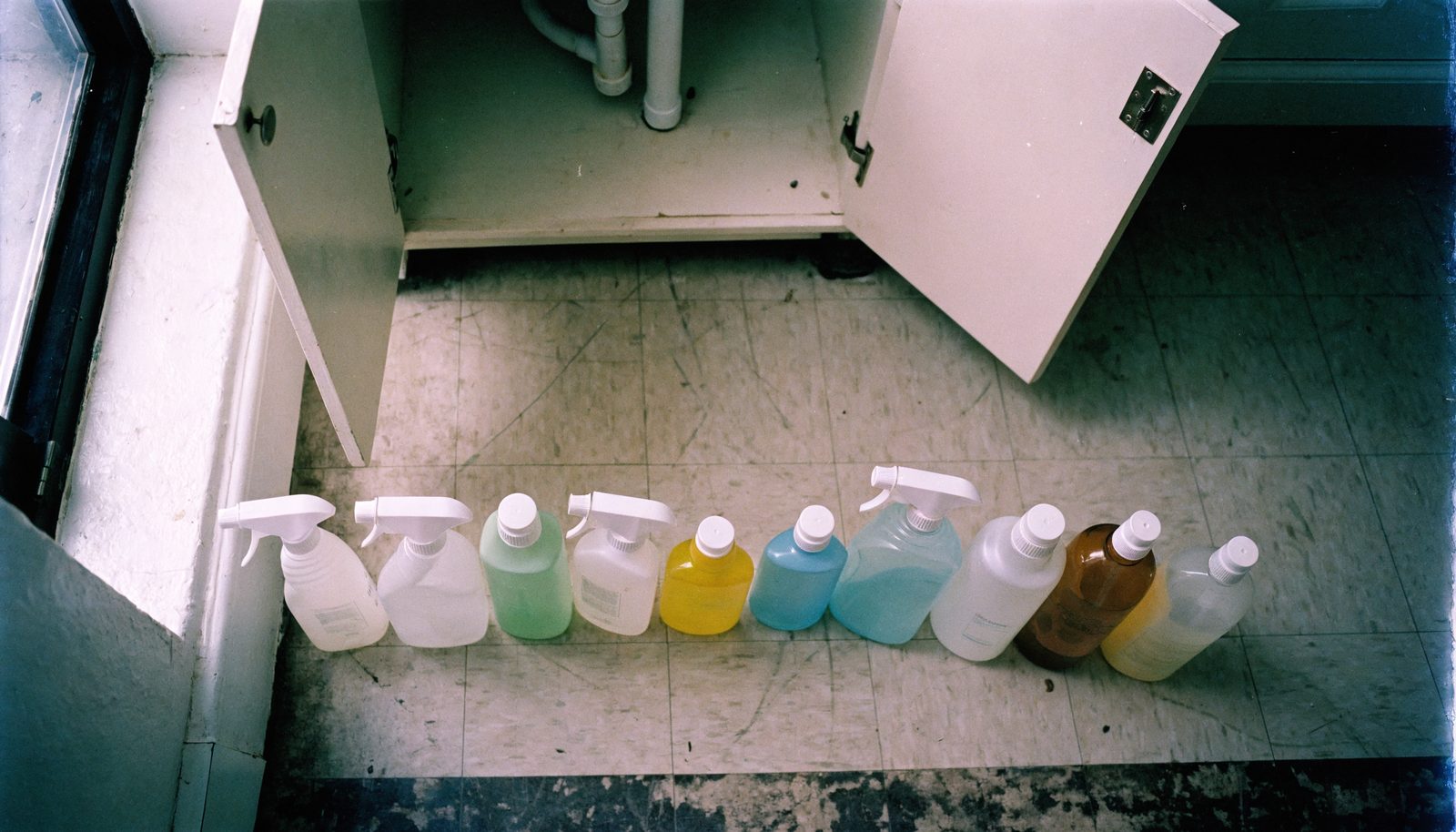
I counted the bottles under my kitchen sink on a Tuesday in February. Eleven of them. Nine said something on the label about being plant-based or naturally derived, which I had paid a premium for. Two were the industrial stuff I keep for the garage.
I cleaned other people's houses for fourteen years. Two-woman crew, mostly the north suburbs, mostly the same eleven houses on a rotation — which is a coincidence I only noticed while writing this. I retired at fifty-four, not gracefully. My knees made the decision before I did.
So I want to be clear about what I am and am not. I am not a writer. This is not a blog. My daughter set this page up because I would not stop talking about a machine at Thanksgiving, and she said if I was going to keep doing that I should at least write it down once and get it out of my system.
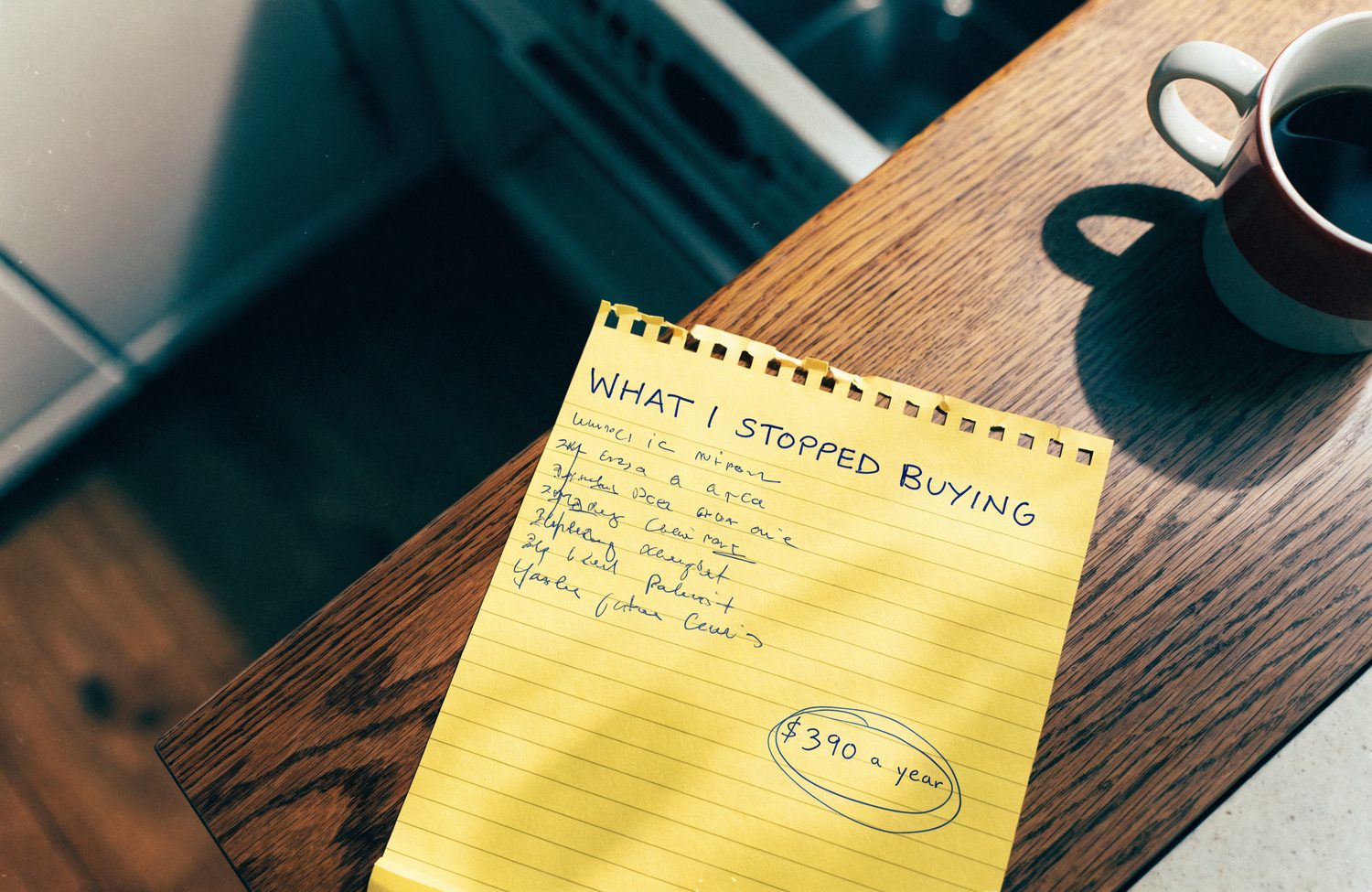
Here is the thing I could not get past, standing in front of that cabinet. Every single one of those bottles had the same job description: get sprayed onto a floor, and then get wiped back off it. That's it. That's the whole product category. I had spent something like $340 a year — I went back through the card statements, it was closer to $390 — on liquids whose entire purpose was to be removed from the surface I put them on.
And I knew, because fourteen years will teach you this whether you want to learn it or not, that they never all come back off.
What follows is the list I made in March, after ninety days of not buying any of it. I wrote it for myself. My daughter says people should see it. Fine.
The cabinet under my sink has one thing in it now
A stack of microfiber pads and a jug of nothing, because the machine runs on tap water. That's the whole inventory.
I want to put a number on what left. Eleven bottles, replaced on a rolling basis, averaged out to a bit over $32 a month across the last two years of statements. Call it $390 a year. I am not going to tell you that you'll save exactly that, because your house is not my house. But I will tell you that the recurring number is now zero, and the one-time number was $79.99, and I have done that math out loud to my sister more times than she'd like.
The thing nobody mentions about the bottles is that you don't buy them all at once. You buy them one at a time, over years, each one solving a problem the last one didn't. That's how you end up with eleven and no memory of deciding to.
I stopped mopping dirt into a thinner version of itself
Here is the part of this job that took me about four years to admit.
A mop bucket is a container of dirty water that you are repeatedly reintroducing to the floor. You start clean. By the third room you are working with a gray solution, and you are moving that solution around a kitchen. Every professional knows this. It's why the good crews change water constantly and the cheap crews don't, and it's why a floor can be technically mopped and still feel like something.
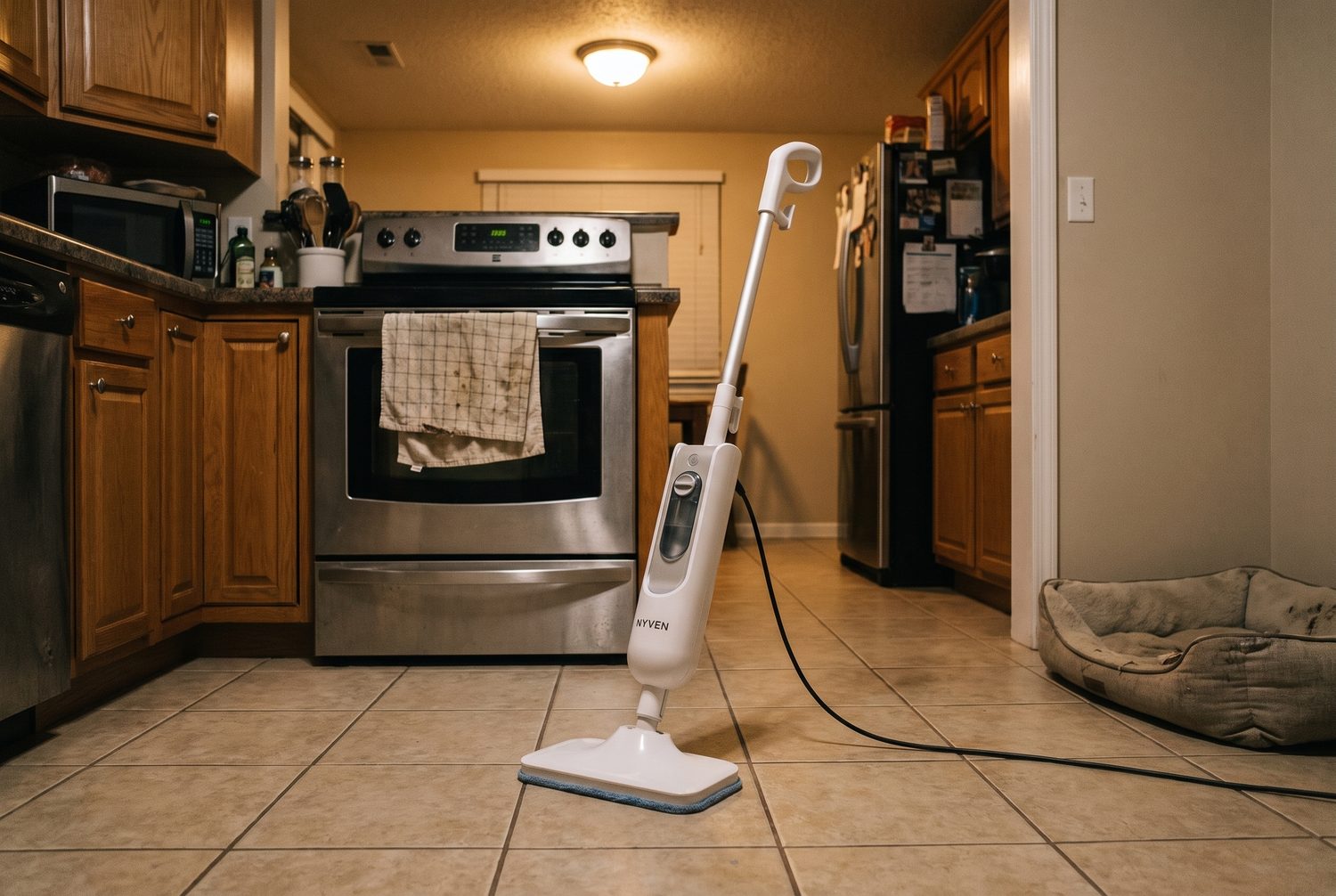
Steam doesn't have a bucket. Water goes in the tank, comes out the head as steam, hits the floor, and gets absorbed into a pad that traps what it lifts. When the pad is filthy you swap it. Nothing gets recirculated.
My floors stopped getting dirty faster after I cleaned them
This is the one I'd want a friend to know.
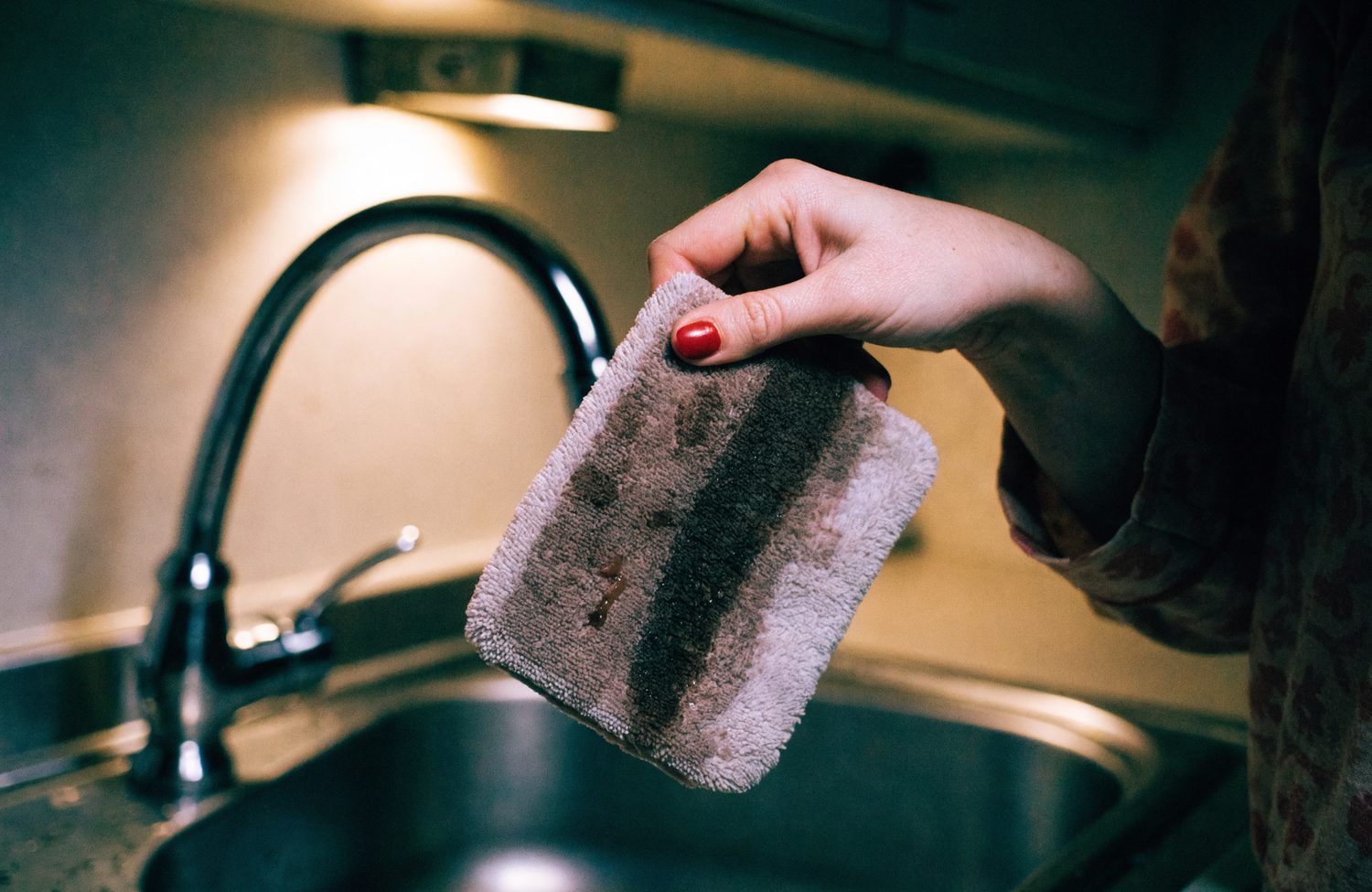
Any liquid cleaner that isn't fully rinsed leaves a small amount of itself behind. That's not a scandal, it's just chemistry — surfactants are designed to cling long enough to do their job. But the residue is slightly tacky, and tacky collects. So the floor looks great on Sunday and by Wednesday it has a haze on it, and you assume the house got dirty, and you clean it again, which lays down more residue.
I spent fourteen years inside that loop and I thought it was normal. Heat and water don't leave anything behind, because there's nothing to leave. Ninety days in, the interval between I cleaned this and this needs cleaning got noticeably longer. That is the single change I did not expect and would not give back.
Grout
I saved the worst room for the second week because I did not believe it would work.
The guest bathroom in my house was built in 1978 and the floor grout has been beige-adjacent for as long as I've owned it. I had assumed it was stained, permanently, in the way old grout is. I've told clients the same thing — that's not dirt anymore, that's just the color it is now.
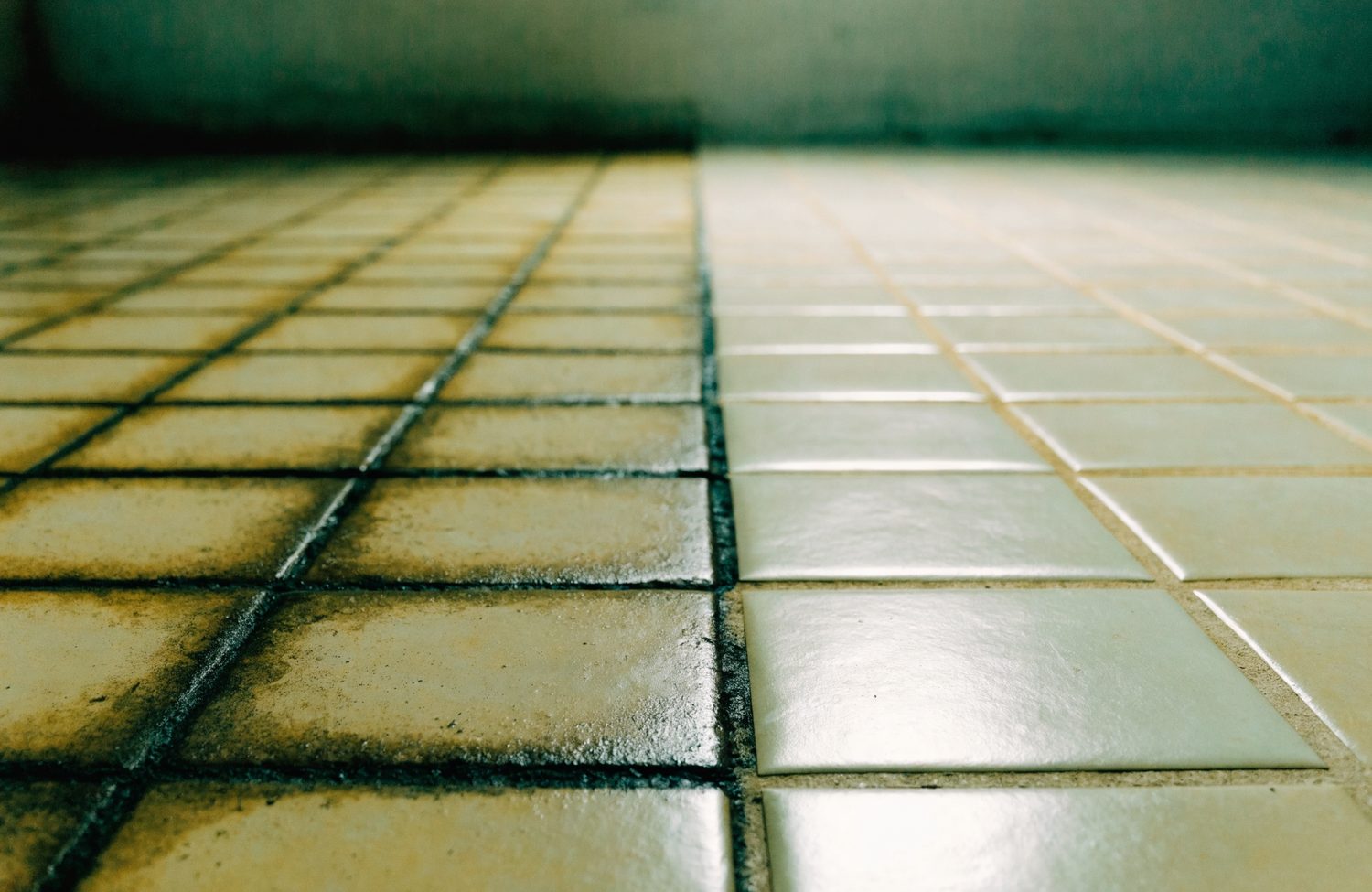
It was dirt. It came up with the detail brush attachment and about eleven minutes of slow passes. The line between done and not-done was so straight it looked fake.
Same thing happened on the kitchen backsplash, where twenty years of aerosolized cooking oil had built up into something a spray bottle would just slide across. Heat softens grease. It's the whole reason a dishwasher runs hot.
I got rid of the glass cleaner too, and that one surprised me
There's a squeegee attachment. I assumed it was filler — the kind of accessory that ships in the box so the number on the front can say six.
It is not filler. Steam the glass, pull the squeegee down in one stroke, and the pane is done with no blue liquid and no paper towels and no streaks in the afternoon light, which is where streaks always show up. I did the inside of every window on my first floor in about twenty-five minutes, including the storm door that I had genuinely stopped looking at.
That's bottle number three or four gone, depending on whether you counted the mirror one separately. I did.
Fifteen seconds is the number that actually changed my behavior
I want to be careful here, because this sounds like a small thing and it is not.
The machine is ready in about fifteen seconds. My old steam mop took a minute and change, and my mop-and-bucket setup took the length of time it takes to fill a bucket at a kitchen sink and carry it without sloshing, which is longer than a minute and involves a decision.
Fifteen seconds is under the threshold where you talk yourself out of it.
If a mess happens at 8pm and cleaning it is a five-minute project, it waits for Saturday. If it's a ninety-second project, it happens at 8pm. Ninety days in, I clean more often and each session is shorter, and the house sits at a better baseline than it ever did when I was doing it properly on a schedule.
Nobody puts this on a box, because makes you slightly more likely to do it is a terrible bullet point. It's also the entire ballgame.
The dog's corner of the living room
I have a shepherd mix named Roger who is eleven and sheds like it's a job.
There's a carpet glider that snaps over the mop head for rugs — you're not soaking the carpet, you're passing steam over it and lifting what's down in the pile. The area rug he lives on had gotten to the point where I'd started thinking of its color as "Roger." It is not that color. It's oatmeal.
The head puts out 212°F steam at two settings, 22 or 30 grams a minute, and you can feel the difference in how much you're putting down. On rugs I run the low setting and go slower. The manufacturer publishes a figure about what 212°F steam does to common household bacteria; I'll let them make their own claims. What I can tell you is that the room smells like a room again, not like a dog lives in it, and I did that with water.
I don't get on the floor for the corners anymore
The head swivels 180 degrees on both axes. That is a specification and I'm going to keep it as one, because I'm not qualified to tell you what it'll do for your particular body.
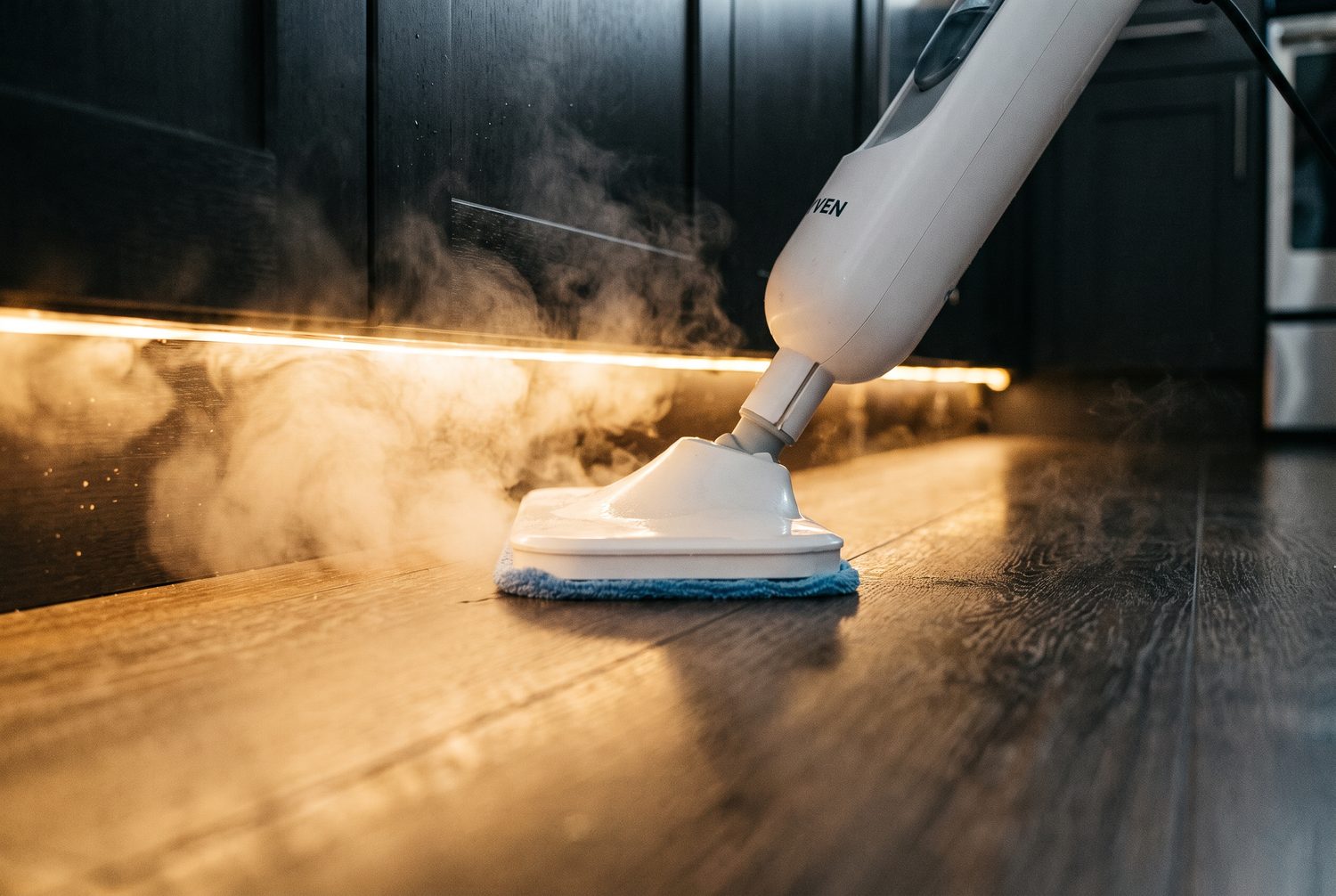
What it did for mine: the toe-kick under the kitchen cabinets, the wedge behind the toilet, and the corner where the stairs meet the hall are now all reachable standing up, at arm's length, with a handle. Fourteen years of getting down and back up again taught me exactly which three feet of a house cost the most, and it's those. That part of the job is over for me.
What I was actually comparing it against
I looked at three things before I bought. Here's the ledger I kept — the middle column is what I was running, the right column is the type of machine I assumed I'd end up with.
| SteamScrub 6-in-1 | Bottles & bucket | Typical big-box steam mop | |
|---|---|---|---|
| Up-front cost | $79.99 (reg. $119.99) | — | $99 – $149 |
| Cost per year after | $0 | ||
| Ready to use in | ~15 sec | ||
| Runtime per fill | 30+ min | — | 15 – 25 min typical |
| Attachments in box | 6 | — | |
| Glass & squeegee | Yes | ||
| Carpet glider | Yes | Sometimes | |
| Steam settings | 2 · 22 / 30 g‑min | — | |
| Leaves residue | No | No | |
| Pads | Machine-washable | — | Machine-washable |
Figures for the SteamScrub column are manufacturer-published. The other two columns reflect typical retail pricing and specifications I observed while shopping in early 2026 and are illustrative of those product categories, not any particular brand.
The comparison that mattered wasn't against the other machine. It was against the cabinet. Ten weeks of not buying bottles and the thing had paid for itself, and every week after that has been the machine handing me money back.
What I don't love about it
If I skip this part you shouldn't trust the rest, so:
The honest column
The tank is 12 ounces. That's 30-plus minutes of steam, which covers my whole first floor, but if you're doing 2,500 square feet in one pass you are going to walk back to the sink. It's a small tank in a light machine — that's the trade, and I'd make the same one, but you should know it's a trade.
It is not a vacuum. You still have to sweep or vacuum first. Steam lifts what's stuck to the floor; it does not pick up cereal. I've read reviews from people who seem to have expected otherwise and I don't know what to tell them.
You have to wash the pads. Machine-washable, no fabric softener or they stop absorbing, and you want more than the ones in the box if you're doing a whole house in a day. Mine live in a drawer with the dish towels.
There's a cord. Cordless steam at this temperature isn't really a thing yet at any price, so I don't hold it against them — but if you were picturing something you carry around untethered, that's not this.
And it's a firm no on unsealed wood. Steam and unsealed hardwood are a bad combination and always have been. Sealed floors, tile, vinyl, stone, laminate rated for it — fine. Check yours first. I've seen someone ruin a floor being enthusiastic.
It's the only cleaning thing I've recommended in ten years
I've been asked for recommendations constantly since I retired and I have mostly refused to give any, because most of this category is the same product in a different bottle and I didn't want to be responsible for someone's $60.
What changed my mind isn't that it cleans better than I could. I could always get a floor clean; I did it professionally. What changed my mind is that it removed a recurring expense, a cabinet full of clutter, the residue loop that was making me clean more often than I needed to, and about three feet of floor per room that used to require my knees.
That's four problems, and I paid seventy-nine dollars once.
If you own tile, sealed hardwood, vinyl, or laminate, and there is a cabinet in your house holding more than four bottles, this replaces most of them and stops the recurring charge. If you have grout you've written off as permanently discolored, try it on a two-foot section before you decide I'm exaggerating. If you have a dog and a rug, you already know which paragraph was for you.
If your floors are unsealed wood, or you were hoping for something cordless, this isn't the one.
That's the whole pitch. I don't have a discount code and nobody gave me one.